Climate Campaigners File Second Climate Suit Against Shell In The Netherlands
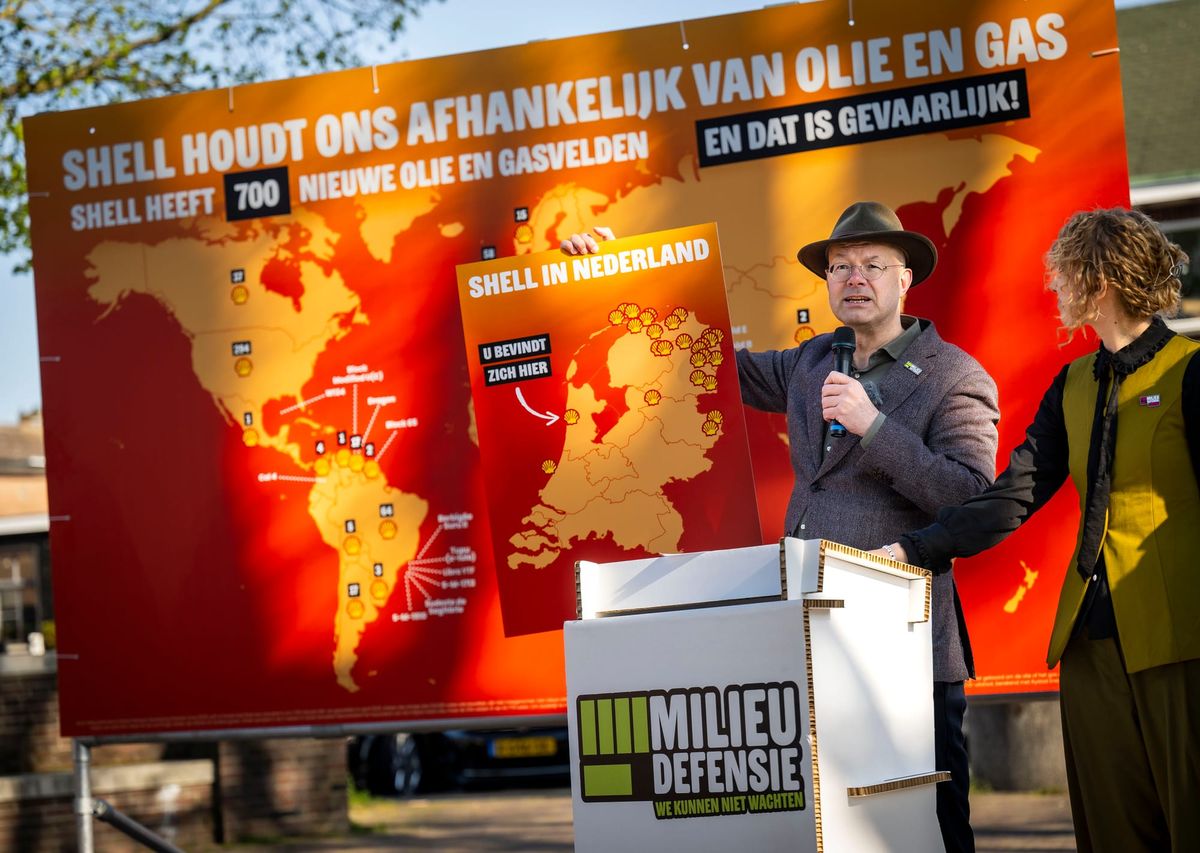
The oil major Shell, formerly known as Royal Dutch Shell, is facing a fresh climate lawsuit in the Netherlands demanding that the company stop expanding its oil and gas production.
Dutch environmental group Milieudefensie (Friends of the Earth Netherlands) filed the case against Shell on April 21 in the District Court of Amsterdam. The group argues that Shell’s plan to increase its fossil fuel production during a time of climate emergency, and its failure to develop targets to reduce its supply chain greenhouse gas emissions from 2030 to 2050, constitute breaches of its duty of care under Dutch law.
“We demand that Shell cease the production of oil and gas from new fields,” Maaike Baan, a researcher and campaigner working on the new case with Milieudefenise, told Climate in the Courts. “We also demand an absolute reduction in Shell’s total Scope 1, 2 and 3 CO₂ emissions.”
Shell is one of the largest oil and gas producers in the world and it has a stake in 700 oil and gas fields that are currently undeveloped. Despite the scientific evidence indicating that continued fossil fuel extraction and expansion is incompatible with avoiding catastrophic climate breakdown, Shell has no plans to curb its production and has even announced its intention to ramp up extraction, particularly for liquified natural gas (LNG).
“The science has been crystal clear for years: if we want to prevent dangerous climate change, every new oil or gas field is one too many,” Donald Pols, director of Milieudefensie, said in a statement.
Milieudefensie says its new case builds upon its first climate lawsuit against Shell, which won a landmark verdict in 2021 from the district court ordering Shell to reduce CO₂ emissions across its entire supply chain (Scopes 1, 2, and 3) by a net 45 percent by 2030. In 2024 the Court of Appeal overturned this order, though the court did state that major polluters like Shell have a general obligation to reduce their emissions. The court also suggested in its ruling that new oil and gas projects may be at odds with international climate agreements.
“In the appeal ruling, the judge emphasized that Shell has a duty to protect human rights and to make an appropriate contribution to achieving the goals of the Paris Climate Agreement,” said Roger Cox, a lawyer who is representing Milieudefensie in its litigation against Shell.
The environmental group says that Shell is disregarding the court’s statement and violating its legal obligation.
“Shell is one of the world’s biggest climate polluters. Only four countries have higher fossil-fuel CO₂ emissions than Shell: the US, China, India and Russia,” said Baan. “Yet in 2025, Shell announced that the company actually wishes to produce and sell more gas until after 2030, and does not intend to reduce its production and sale of oil. This is contrary to the November 2024 ruling of the Court of Appeal of The Hague, which found that Shell has its own duty to reduce its emissions and combat dangerous climate change. Shell is showing that it is ignoring this duty. In view of these facts and the urgency of the climate crisis, Milieudefensie has no other choice but to bring a new court case against Shell.”
Shell did not immediately respond to a request for comment.
Milieudefensie’s second case against Shell comes at a time when global fossil fuel energy markets are in turmoil as the US and Israeli war against Iran has spurred the largest oil supply disruption is history, driving up prices at the pump while major oil companies enjoy windfall profits. Pols said these war-driven price spikes “highlight just how vulnerable and unsustainable the fossil fuel system is. Ordinary people are paying the price, while major polluters are lining their pockets.”
Last year Milieudefensie announced it would be initiating a second climate case against Shell. The group sent a letter to Shell executives outlining its allegations and demands, the first step in the litigation process. In addition to demanding that Shell cease all new investments in oil and gas production, Milieudefensie seeks for the court to order Shell to set specific interim targets for the period between 2030 and 2050 to reduce its greenhouse gas emissions aligned with net zero-emissions pathways
Shell has said that it aspires to reach net zero emissions by 2050. But Milieudefensie argues that the company’s lack of concrete steps or targets to get there suggests that its net zero goal is little more than a marketing slogan. Shell should also be ordered by the courts to slash its carbon emissions by specified percentages, the group contends – an argument it will be presenting next month to the Dutch Supreme Court in its initial lawsuit against the oil major.
“We believe that Shell, as a major polluter, should be imposed a clear percentage in order to genuinely protect people from dangerous climate change caused by Shell,” Baan said.
The hearing before the Supreme Court is scheduled for May 22.