Maryland's Top Court Rules In Favor Of Oil Companies, Nixes Climate Tort Suits

Maryland’s highest court on Tuesday affirmed dismissal of climate tort cases brought by the cities of Baltimore and Annapolis and Anne Arundel County against major oil and gas companies that sought to make the companies pay damages for localized climate change impacts. Applying Maryland law to injuries stemming from global greenhouse gas emissions, the justices said, extended beyond state authority, and federal law preempts the state law claims asserted by the municipalities. The ruling is a major setback for attempts by state and local governments to hold fossil fuel producers liable for climate change harms and alleged deception.
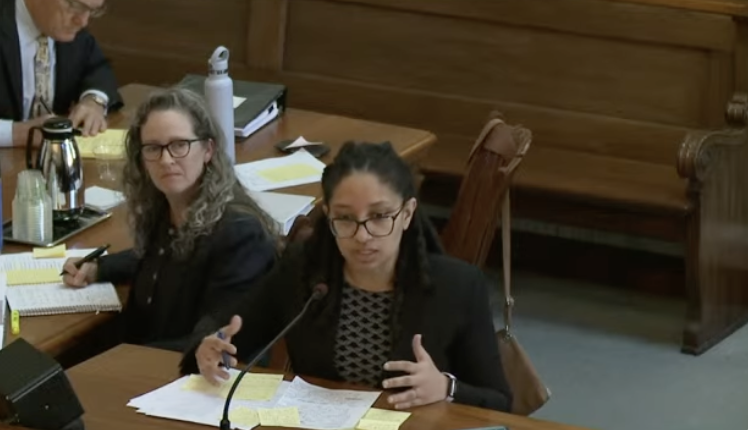
The court’s decision in favor of the fossil fuel defendants followed a hearing in October in which many of the justices appeared skeptical of the arguments made by counsel for the municipalities. During the hearing, the justices questioned the municipalities’ position that their claims are squarely about deception and not about greenhouse gas emissions that are interstate and global in scope.
That skepticism carried through into the court’s ruling, though the opinion was not unanimous. Justice Peter Killough wrote a blistering dissent refuting the majority’s characterization of the claims and its analysis that flowed from a “false premise.” Killough said the claims were not based on global emissions but instead on alleged deception and fraud, and that the majority bought into the defendants’ “strawman” argument. The majority “did not decide the case plaintiffs brought,” Killough wrote. “Rather, it decided the case defendants described.”
Baltimore sued 26 fossil fuel companies in 2018 under state law claims such as nuisance, trespass, and failure to warn, alleging the companies deceived the public about the climate risks associated with their products and that this deception ultimately exacerbated the climate change problem that is damaging and costing the city. Anne Arundel County and Annapolis filed similar complaints a few years later. Defendants tried to characterize the claims as arising under federal law in repeated attempts to remove the suits into federal court, but were unsuccessful. Back in state court, the companies filed motions to dismiss, and in 2024 a Maryland circuit court granted dismissal, deciding that the claims were actually about emissions and thus were preempted by federal law.
In its March 24 ruling, the Maryland Supreme Court majority upheld this decision and reached the same conclusion that state law claims pertaining to climate change and greenhouse gas emissions are not viable.
“Although we are required to view the local governments’ allegations in the light most favorable to them, we are not required to defer to their characterization of the nature of their claims. No amount of creative pleading can masquerade the fact that the local governments are attempting to utilize state law to regulate global conduct that is purportedly causing global harm,” Justice Brynja Booth wrote in the majority opinion.
The majority decided that the claims were preempted by the Clean Air Act and federal law, and that they would not be viable even if preemption did not apply because they would stretch tort law far beyond its traditional bounds. For the failure to warn claim, they said that “the duty the local governments seek to impose is, indeed, a duty to warn the entire human race of the effects of climate change.”
Justice Shirley Watts dissented in part, agreeing with Killough that the municipalities’ fraud and deceptive marketing claims are not preempted by federal law. However, she determined that under the causes of action asserted, like nuisance, the municipal plaintiffs “have not stated legally cognizable claims.”
In his dissent, Killough said that he would have kept intact the nuisance and negligent failure to warn claims. He strongly disagreed that the Clean Air Act displaces or preempts the municipalities’ claims, noting that the statute does not address fraud or misleading marketing. The Trump administration’s recent rescission of its greenhouse gas endangerment finding only further undermines the preemption argument, Killough said, noting that the majority did not even address the rescission.
“The Majority’s rationale would bar the States from the courthouse while the federal government simultaneously abandons the field,” Killough wrote. “The Clean Air Act does not mandate such an absurd result, and it is not one this Court should impose here—particularly on a motion to dismiss.”
The majority’s flawed analysis, he writes further, comes at the “precise moment when the federal regulatory floor that supposedly forecloses all state remedies is being dismantled by the executive branch. That is not a sound basis for the result the Majority reaches, and the local governments deserve the opportunity to be heard on the merits of their claims. In its haste to close the courthouse doors, the Majority has built its edifice on sinking ground.”
Climate lawsuits targeting Big Oil are continuing to wind their way through courts across the country and none have yet made it to trial. Some cases have been dismissed by state courts, and most of those rulings are being appealed. Prior to Tuesday’s ruling, all state supreme courts that had taken up cases against oil majors on appeal have allowed them to move forwards towards trial. A consumer fraud case in Massachusetts against ExxonMobil is deep into pre-trial discovery. And supreme courts in Hawaii and Colorado have both rejected oil companies’ appeals in climate damage cases that are similar to the ones brought by Baltimore. The Maryland supreme court ruling marks a split from that pattern, and comes as the US Supreme Court is preparing to review the ruling from the Colorado supreme court, having recently accepted a petition lodged by oil company defendants in a climate damages case filed by Boulder, Colorado.