Environment and Public Health Groups, and Youth, Sue Over Trump Administration’s Elimination of Climate Protections
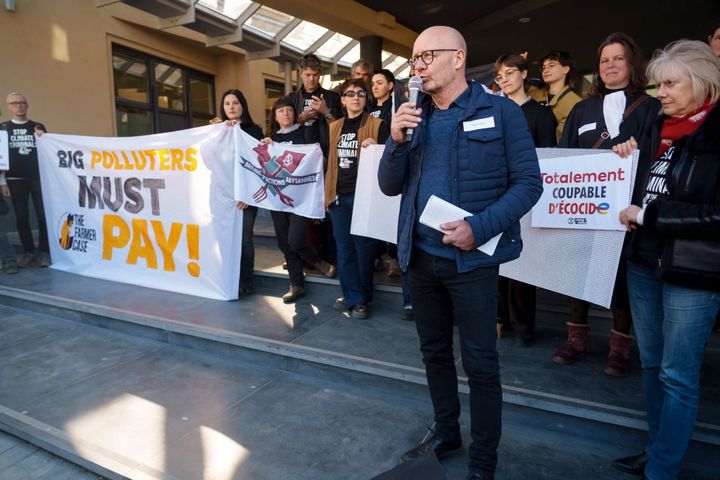
Multiple environmental and public health organizations sued the U.S. Environmental Protection Agency on Wednesday over the agency’s recission of its 2009 finding that greenhouse gases endanger public health and welfare and its related repeal of greenhouse gas emissions controls on motor vehicles. The rollbacks, referred to by the Trump administration as the single largest deregulatory action in U.S. history, represent the administration’s most sweeping attempt yet to make climate denial official policy and to gut federal climate change protections.
Such a move will have disastrous consequences and is patently illegal, the groups bringing the legal challenge say.
“This shortsighted rollback is blatantly unlawful and their efforts to force this upon the American people will fail,” said Joanne Spalding, director of the Sierra Club's Environmental Law Program.
In addition to the Sierra Club, the challengers include the American Public Health Association, American Lung Association, Alliance of Nurses for a Healthy Environment, and Clean Wisconsin—all represented by Clean Air Task Force; Center for Community Action and Environmental Justice (CCAEJ), Clean Air Council, Friends of the Earth, Physicians for Social Responsibility, Rio Grande International Study Center (RGISC), and the Union of Concerned Scientists—all represented by Earthjustice; and the Center for Biological Diversity, Conservation Law Foundation, Environmental Defense Fund, Environmental Law & Policy Center, Public Citizen, and the Natural Resources Defense Council. These groups jointly filed a petition in the DC Circuit Court of Appeals for a review of the EPA’s action, which was announced at a press conference last week and published in the Federal Register on February 18.
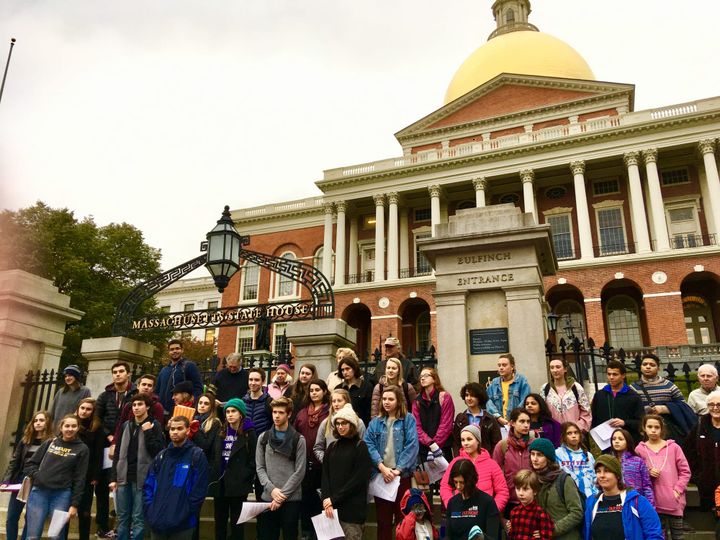
Separately, a group of 18 children and young Americans ages 1 to 22, represented by the nonprofit law firms Our Children’s Trust and Public Justice, filed a petition for review in the same court alleging that the EPA’s move is unconstitutional.
“By reversing the endangerment finding and standards for cleaner vehicles, EPA is greenlighting dangerous pollution that will fill our communities and lungs with dirty air,” Julia Olson, chief legal counsel at Our Children’s Trust, said in a statement. “That violates children’s constitutional rights to life, liberty, and religious freedom. The court must stop it.”
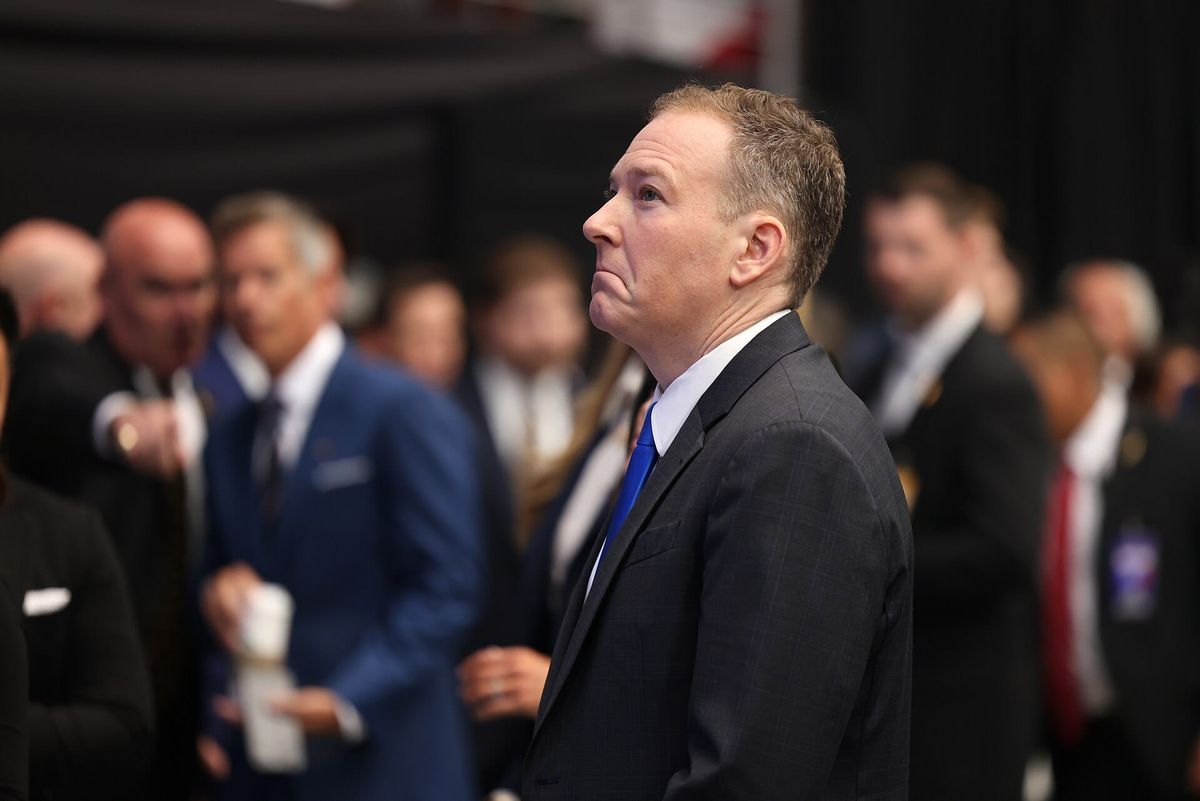
EPA Administrator Lee Zeldin, joined by President Donald Trump at the White House, announced on February 12 that the agency’s 2009 greenhouse gas endangerment finding is now eliminated. The science-based finding served as the underpinning for the EPA’s legal authority to rein in greenhouse gas emissions under the Clean Air Act. It stemmed from a 2007 Supreme Court ruling, in a case called Massachusetts v. EPA, which found that greenhouse gases are pollutants under the Clean Air Act. Per the statute, EPA would then be required to regulate such pollutants if it made a finding that they endanger public health and welfare. The agency then made its endangerment finding in 2009, and it has survived all court challenges since then.
The Trump administration now claims that the EPA lacks authority to regulate greenhouse gases under the Clean Air Act, a position that appears to conflict with the Supreme Court’s holding in Massachusetts that the statute does, in fact, apply to greenhouse gases. Legal experts say they suspect the administration is counting on the Court, which is now controlled by right-wing justices, to overturn its own precedent.
“I think it’s pretty clear that what the Trump administration is aiming to do is to get the Supreme Court to revisit the Massachusetts v. EPA [decision],” Ann Carlson, founding faculty director of the Emmett Institute on Climate Change and the Environment at UCLA School of Law, said during a webinar last September.
According to a press release from the environmental and health groups challenging the Trump EPA’s rollbacks, the agency is rehashing legal arguments that the Supreme Court already considered and rejected in Massachusetts v. EPA.
The groups say that the endangerment finding repeal completely disregards the robust climate science and betrays EPA’s mission to protect public health and the environment.
“EPA is attempting to completely disavow its statutory authority to regulate greenhouse gases from motor vehicles. After two decades of scientific evidence supporting the 2009 finding, the agency cannot credibly claim that the body of work is now incorrect,” said Brian Lynk, senior attorney at Environmental Law & Policy Center. “This reckless and legally untenable decision creates immediate uncertainty for businesses, guarantees prolonged legal battles, and undermines the stability of federal climate regulations.”
“We need to call the Trump Administration's repeal of the Engagement Finding what it is – climate denialism and the EPA abandoning its responsibility to protect us from climate change,” said Katie Huffling, executive director of Alliance of Nurses for a Healthy Environment. “The EPA is legally required to protect against air pollution that endangers the public’s health. It’s time that the EPA be held accountable for these reckless actions.”
Youth Assert Constitutional Violations
The youth-led challenge to the Trump EPA’s endangerment finding repeal seeks to hold the administration accountable for its deregulatory actions that will disproportionately burden the youngest generations, as children and young people will have to live through the worsening consequences of an accelerating climate crisis. The 18 youth petitioners say that the EPA is violating their constitutional rights to life, liberty, and religious freedom by unleashing more climate pollution that threatens their health and wellbeing.
“My Catholic faith teaches me to care for all life and protect the most vulnerable, and it teaches that children are a gift. I now struggle to imagine bringing a child into a world where the air is unsafe and the climate is increasingly unstable,” said lead petitioner Elena Venner. “The EPA’s repeal of the Endangerment Finding violates my First Amendment right to practice my faith and my Fifth Amendment rights to life and liberty. I have asthma, and worsening pollution harms my health and makes it harder for me to breathe and live fully outdoors. When the air is thick with the pollution of fossil fuel burning cars and trucks and ever-increasing wildfire smoke, I feel it in my chest, and I am reminded that something as basic as breathing is no longer guaranteed.”
According to a press release, the youth petitioners “will assert that the agency’s rulemaking deliberately covered up decades of established climate science and the true costs to their lives, their health, and their religious and cultural practices. Youth who previously settled a case with their state government under the Hawai‘i Constitution to eliminate greenhouse gas pollution in their state transportation system, also invoke their reserved rights not to live with the fossil fuel pollution this administration is intent on imposing on their communities and their State.”
The youth petitioners come from various states across the U.S., including Alaska, California, Colorado, Hawai‘i, Montana, New York, Pennsylvania, Tennessee, Washington, and Wisconsin.
Our Children’s Trust and Public Justice are also representing young people who are suing the Trump administration over several executive orders directing the federal government to double down on fossil fuels, suppress climate science and undermine renewable energy. The EPA’s endangerment finding repeal originated with one of one of these orders from President Trump, which directed the head of the EPA to submit recommendations on the “legality and continuing applicability” of the finding.
The case challenging Trump’s fossil fuel executive orders, called Lighthiser v. Trump, was initially dismissed by a federal district court in October, but the youth plaintiffs are appealing. The case will be heard by the Ninth Circuit Court of Appeals on April 13.