High Court Of Australia Mulls Impacts From Coal Mine Expansion In Its First Climate Case
Australia’s highest court is hearing its first climate change case this week in what experts say is a “watershed moment” for Australians living through worsening climate impacts and for climate law in the country. The court’s decision will set binding national precedent on the question of whether planning authorities are required to consider localized climate impacts stemming from the downstream greenhouse gas emissions of fossil fuel projects.
The case, MACH Energy Australia Pty Ltd v. Denman Aberdeen Muswellbrook Scone Healthy Environment Group Inc., concerns a planning commission’s approval of a proposed coal mine expansion in New South Wales. Last year an appeals court ruled in favor of the community group challenging the mine expansion approval, finding that the commission failed to consider the full climate impacts, including local damages, of the mine’s contribution to global greenhouse gas emissions. MACH Energy is now challenging that ruling with an appeal to the High Court of Australia. The court, located in the Australian capital of Canberra, is hearing the case on May 13.
“This landmark High Court case is a watershed moment for every Australian currently living through the reality of climate whiplash,” said Lesley Hughes, distinguished professor of biology at Macquarie University and a former federal Climate Commissioner and lead author of the IPCC’s Fourth and Fifth Assessment Reports. “From families picking through the rubble of catastrophic fires to communities reeling from back-to-back floods, Australians are paying a heavy price for fossil fuel expansion.”
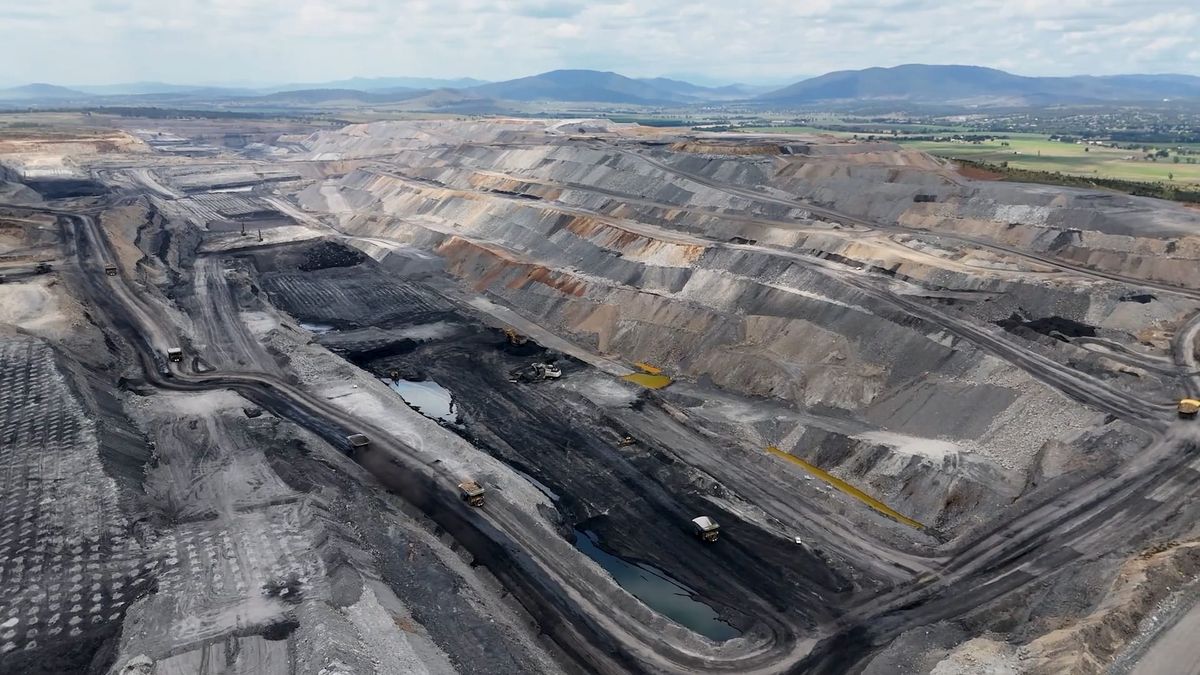
MACH Energy’s Mount Pleasant open-cut coal mine is located near the town of Muswellbrook in New South Wales’s Hunter Valley region and is permitted to extract up to 10.5 million metric tons of coal per year for export. The proposed expansion would double that output, making it the largest coal mine in the state, and would extend the mine’s operation by more than 20 years. The expansion would generate an additional 870 million metric tons of CO2, 98 percent of which would be downstream or “scope 3” emissions from the burning of the coal overseas.
In 2022 the New South Wales Independent Planning Commission approved the project’s expansion. Denman Aberdeen Muswellbrook Scone Healthy Environment Group (DAMS HEG), a group of farmers and local residents, sought to overturn the approval. The New South Wales Land and Environment Court initially dismissed their challenge, but the Court of Appeal of New South Wales took up the case on appeal and ruled unanimously in the group’s favor on July 24, 2025. The court found that the planning commission had failed, under 4.15(1)(b) of the Environmental Planning and Assessment Act, to consider the specific local climate impacts associated with the mine’s emissions.
The Court of Appeal’s ruling built upon a landmark 2019 decision from the Land and Environment Court that cited climate change impacts as one of the grounds for upholding a planning authority’s denial of the proposed Rocky Hill Coal project. The ruling also came just hours after the International Court of Justice issued its historic climate change advisory opinion on July 23, 2025, which explicitly suggested that fossil fuel production, export licensing and subsidies can constitute internationally wrongful acts.
“The NSW Court of Appeal's decision was truly groundbreaking, and is already changing how proposals for new and expanded fossil fuel projects are assessed in New South Wales,” said Elaine Johnson, director of Johnson Legal – the law firm representing DAMS HEG in the case. “The High Court will now determine whether that decision holds at law on appeal.”
MACH Energy argues that local climate impacts cannot be traced specifically to the emissions of a given source. Legal experts with the Sabin Center for Climate Change Law at Columbia University and the University of Cambridge’s Centre for Climate Engagement, who are supporting DAMS HEG as amici curiae in the appeal, counter by arguing that “climate attribution science and the law are now sufficiently developed such that certain local climate impacts can reasonably be understood as a likely consequence” of the mine’s greenhouse gas emissions. As the experts write in a blog post, the case raises the question of whether the mine’s emissions could be likely to cause impacts in a particular locality. And the court’s answer to this question, they say, “is likely to be scrutinized in courts within Australia and beyond, with the case potentially having global implications given Australia’s position as a major fossil fuel exporter.”
Climate scientists have warned that every additional ton of greenhouse gas emissions contributes to the worsening climate crisis that manifests in localized environmental damage and extreme weather in communities across the globe. Climate attribution science, furthermore, is now able to connect specific damages or weather extremes like heat waves to emitting sources like large fossil fuel producers.
“Every tonne of carbon dioxide added to the atmosphere contributes to global warming — and that warming is already measurably increasing the frequency and severity of extreme heat, drought, flood and fire events across south-eastern Australia and globally,” said Australian climate scientist Mark Howden, a vice chair of the IPCC’s Working Group II.
“Drawing quantitative linkages between individual greenhouse gas emitters and particularized harms is now feasible, making science no longer an obstacle to the justiciability of climate liability claims,” Howden added. “The science linking human activity to observed and future climate changes is clear and unequivocal. The question before the High Court is whether Australian law is prepared to recognize it.”