Turn To The Courts: Report Reflects On 10 Years Of Climate Litigation
In the face of government inaction and corporate impunity in worsening climate crisis, courts are playing a critical role, new analysis finds.
Co-published with One Earth Now
On June 24, 2015, the Hague District Court in the Netherlands handed down a world-first ruling in a climate lawsuit brought by the Urgenda Foundation and 886 Dutch citizens against the Dutch government. For the first time anywhere in the world, a court had determined that a national government has a legal duty to protect its citizens from dangerous climate change. The Dutch court ordered the government to reduce its greenhouse gas emissions at least 25% (below 1990 levels) by the end of 2020.
The decision had a ripple effect around the world, inspiring similar cases in countries such as Germany, Belgium, Ireland, France, Colombia, South Korea, and New Zealand. Now, 10 years later, climate litigation has become a powerful global force that is reshaping climate policy and governance, establishing key principles for holding governments and corporate polluters accountable, and building a durable edifice for climate protection.
That’s according to a new report published earlier this month by the Climate Litigation Network, a project of the Urgenda Foundation that supports communities using the law to protect our shared future. The report reflects upon the last decade of climate litigation and discusses why this turn to the courts is happening and what the impacts have been, both within and beyond the courtroom.
“It’s critical that this reflection on the impact of climate litigation is also happening 10 years after the Paris Agreement was signed, and now in the days after COP30 concluded – as there is a very close relationship between the weakness of international climate regime, and the global movement of accountability through climate litigation that’s developed over the past ten years – and that will continue to play a crucial role,” Lucy Maxwell, co-director of the Climate Litigation Network, said during a media briefing ahead of the report’s Dec. 2 launch.
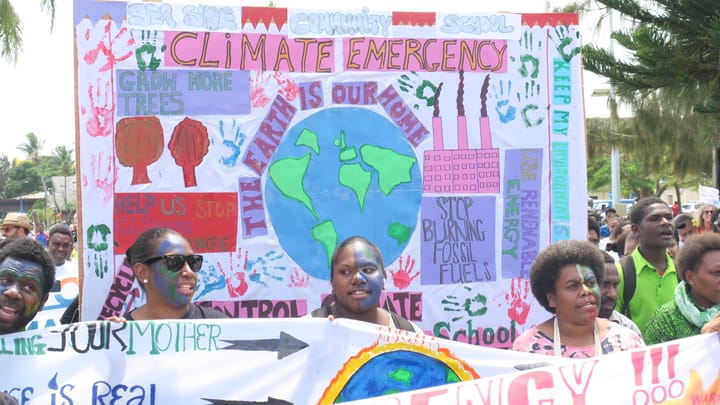
With our political systems failing to meet the moment and to respond to the climate crisis at the scale and urgency required, courts are an essential backstop for preventing further regression and safeguarding fundamental rights in the face of widespread climate harm, the report suggests. People are turning to the courts because their political leaders have failed them.
“Climate litigation is a direct response to the decades-long inability of politicians to deliver on their promise to protect us all from the devastating impacts of climate change,” Maxwell said.
Accountability mechanism for the Paris Agreement
World leaders have been meeting to discuss and negotiate a path forward on climate action for 30 years, under the UN Framework Convention on Climate Change’s Conference of the Parties procedure. A landmark deal was reached at COP21 in Paris 10 years ago, when 195 state parties agreed on the overarching objective to limit the rise in global average temperature to well below 2°C (above pre-industrial levels) and to strive to have it not exceed 1.5°C. The Paris Agreement was adopted on December 12, 2015.
A decade later, the world is dangerously off-track towards meeting its Paris promise. The 1.5°C target is set to be exceeded in the next few years, and temperatures are projected to rise by 2.5°C to 2.8°C by century’s end under current policies. The Paris Agreement established long-range goals for getting global warming under control, but left it up to countries to decide for themselves how they would contribute to the overall goals.
“The agreement lacks a mechanism to test whether each country’s target is sufficient and fair toward that collective temperature limit. And that’s where climate litigation comes in,” Maxwell explained. “Over the past decade people have turned to the courts to build that accountability framework from the ground up.”
Legal architecture for climate protection
CLN’s report finds that, during this time, climate lawsuits have worked to build a legal architecture for climate protection.
In framework cases brought against governments, for example, courts have clarified that national climate targets and plans must be specific and that mitigation actions cannot be deferred because that would unduly burden younger and future generations.
Additionally, it has now become clear that countries’ emissions reduction targets (known in UN parlance as Nationally Determined Contributions) must be fair and science-based, aligned with the 1.5°C objective, and they must be implemented. The International Court of Justice, the world’s highest court, laid out these standards in its historic advisory opinion on climate change issued in July this year. The opinion, along with other rulings from national and international courts, establish that governments have binding legal duties to protect people from climate change.
In other words, climate court cases have helped to anchor the goalposts and clarify what is expected in terms of government climate policy. But, as the report says, “The question now is whether governments will meet this legal standard in practice – or leave it to future courts to compel compliance.”
In some cases, climate litigation has already led to real change, strengthening climate policies and influencing public opinion, the report notes. As Maxwell explained, governments have strengthened their targets and amended their climate laws in Brazil, Germany, Ireland, the Netherlands, and South Korea. In the Netherlands, the Urgenda case ruling led to the adoption of new policies to curb emissions. “Even as the Government appealed the ruling, it took steps to cut emissions, including bringing forward the closure of the Hemweg coal-fired power plant by five years,” CLN’s report explains. As a result, the Netherlands achieved the 25% emissions reduction by 2020 that the courts had ordered.
Targeting corporate climate polluters
Governments have not been the only targets of climate lawsuits. Communities, organizations and individuals are increasingly taking corporate polluters to court.
“We all know that the world’s highest-emitting companies shouldn’t be able to pollute with impunity, making profits on the back of our future. Now the courts are catching up,” Sarah Mead, co-director of the Climate Litigation Network, said in a press release.
Inspired by the Urgenda case, a Dutch environmental group called Milieudefensie brought a landmark case in 2019 against Shell, which at the time was headquartered in the Netherlands. The case argued that Shell, as a major carbon emitter, was violating its duty of care under Dutch law, and in 2021 the district court agreed and ordered the company to slash its entire supply chain emissions 45% by 2030. The ruling was another world-first, a monumental advance in corporate accountability for climate change. In 2024 an appeals court ruled in favor of Shell and overturned the emissions reduction order, but in doing so the court still recognized that major emitting companies have a legal duty to limit their emissions.
That principle, Mead said, “will now serve as the foundational building block for the next generation of corporate framework cases.” Those types of cases generally challenge corporations’ failure to mitigate emissions or transform their business in alignment with the Paris Agreement goals.
Other corporate climate cases aim to make companies pay for climate-related loss and damage. One pioneering case in this category, Lliuya v. RWE, involved Peruvian farmer and mountain guide Saúl Luciano Lliuya who sued German energy company RWE in 2015 over the company’s contribution to the buildup of greenhouse gases in the atmosphere, which is changing the environment in Lliuya’s community and putting his home at risk of flooding. While the case was ultimately dismissed because the evidence of flood risk was not strong enough, the court affirmed the principle that major emitters like RWE can be held liable for their contributions to climate damage.
New cases are already underway seeking to build upon and apply that principle. Pakistani farmers who suffered devastating losses during the 2022 Pakistan floods have initiated a case in Germany against RWE and the cement company Heidelberg Materials, hoping to make those companies pay for a proportion of damages associated with the flooding disaster. And survivors of typhoon Odette which ravaged the Philippines in 2021 are now suing Shell in the UK.

In the U.S., major fossil fuel companies are facing over two dozen cases centered around allegations of fraud and deception on climate change and its risks and solutions. Many of the cases are attempting to make the companies pay for localized climate damage and adaptation costs, and several are inching closer to trial after years of procedural delays.
Mead and Maxwell say corporate climate accountability cases are already having an impact beyond the courtroom, as they create material financial risk for the companies targeted and expose polluters’ “complete disregard for our collective future.”
Shortfalls and stymying climate action
While there have been notable breakthroughs and important advances in the climate litigation space, oftentimes litigation falls short or fails to result in justice or accountability, and sometimes the courts are used by powerful interests to target environmental activists or push back against climate action.
As a paper published in the journal Nature in October points out, “litigation is increasingly used to stymie climate action.” The authors observe that SLAPP suits, or strategic lawsuits against public participation, “are being used to silence activists and lawyers fighting climate change. For example, in March 2025, a North Dakota jury found Greenpeace liable for US$660 million in damages to an American oil and gas company, Energy Transfer for its involvement in protest against the Dakota Access Pipeline.”
In the United States, climate lawsuits brought by young people against governments have faced steep hurdles, with courts refusing to hear many of them on the merits. That pattern stands in sharp contrast to other countries, where courts have accepted climate cases, including youth-led ones, and have often ruled in plaintiffs’ favor.
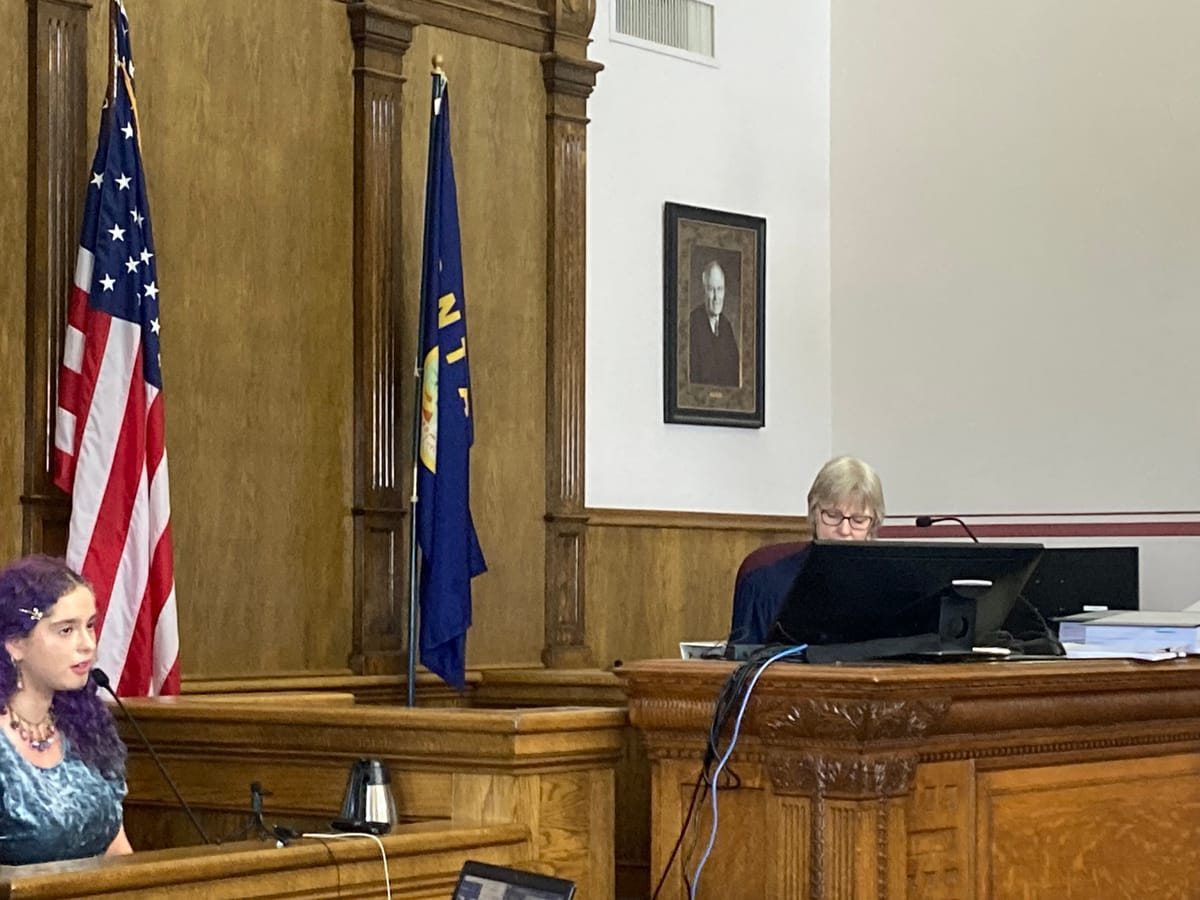
An exception in the U.S. was a case in Montana brought by youth activists against their state government over an anti-climate policy, which went to trial and resulted in a breakthrough victory for the young plaintiffs. But cases challenging the US federal government’s response to climate change and support for fossil fuels have so far fallen short. After nearly a decade of procedural wrangling, the Juliana v. US case ended earlier this year without ever reaching trial, and a new youth climate case filed this year against the Trump administration was dismissed by the trial court in October.
Looking ahead
Climate litigation is by no means a silver bullet. “No one is under the illusion that we are going to litigate our way out of this crisis. Litigation is just one tool,” Nikki Reisch, director of the climate and energy program at the Center for International Environmental Law, told me in an interview in October.
And yet, as the CLN report highlights, litigation has become an essential instrument to push for greater climate action and accountability.
“Climate litigation is proving to be one of the most powerful tools we have to shift the dial in the favor of stronger climate action,” Mead said.
Observers and experts in this space say that the trend of turning to the courts amidst the climate emergency will certainly continue, with many more cases expected to be filed over the coming years.
“The last ten years have constructed a legal architecture that’s now very clear. What’s needed is enforcement and implementation,” Maxwell said. She said she expects the next phase of government climate cases will focus on those aspects.
In Montana, for example, the youth activists who succeeded in their climate suit against the state government have now filed a fresh petition with the state’s highest court seeking to enforce the court’s judgment and overturn several new laws that they say defy the courts and the Montana constitution.
“In the face of government inaction,” Mead noted, “courts are stepping in. This is democracy in action.”